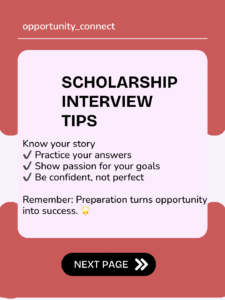
1. Understand Your Story
One of the most common questions in scholarship interviews is:
Tell is about yourself.
This question allows interviewers to understand your background, experiences, and motivations.
When preparing your answer:
Highlight your academic journey
Mention key achievements
Share challenges you’ve overcome
Connect your story to your future goals
Instead of memorizing responses, focus on telling your story naturally and confidently.
Understanding the organization behind the scholarship is essential.
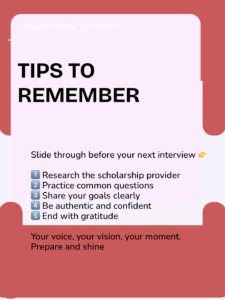
2. Research the Scholarship Provider
Understanding the organization behind the scholarship is essential.
Research:
The mission and values of the organization
What the scholarship aims to achieve
The type of students they support
When your goals align with the organization’s mission, it shows the panel that you are a strong fit for the scholarship program.
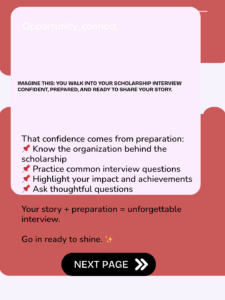
3. Practice Common Scholarship Interview Questions
Preparation helps reduce nervousness and improves confidence.
Some common scholarship interview questions include:
Why do you deserve this scholarship?
What are your career goals?
How will this scholarship help you achieve your goals?
How do you plan to contribute to your community?
Practice answering these questions with a mentor, friend, or by recording yourself.
4. Highlight Your Impact
Scholarship committees want students who will create positive change.
During your interview, highlight:
Leadership roles
Volunteer experiences
Academic achievements
Community initiatives
Focus not only on what you did but also the impact of your actions.
5. Be Authentic and Confident
Confidence does not mean being perfect. It means being prepared, honest, and passionate about your goals.
During the interview:
Speak clearly
Maintain good posture
Make eye contact
Show enthusiasm
Remember, the interview panel wants to see the real person behind the application.
6. Ask Thoughtful Questions
At the end of most interviews, candidates are given the opportunity to ask questions.
This is a chance to demonstrate curiosity and engagement.
Consider asking:
What opportunities are available for scholarship recipients?
Are there mentorship or leadership programs?
How can scholars contribute to the organization’s mission?
7. End with Gratitude
Always thank the interview panel for their time and the opportunity.
A simple closing such as:
Thank you for the opportunity to share my goals and experiences. I truly appreciate your time.